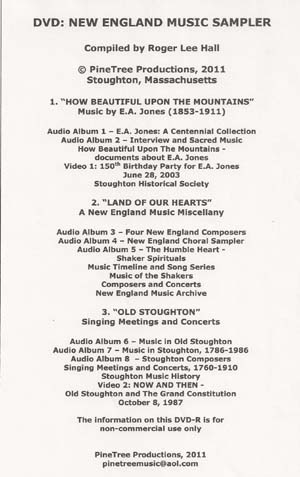
New England Music Archive [NEMA]
Roger Hall, Director
The New England Music Archive is a collection of recordings and scores
intended to preserve rare and historical music from New England's past,
roughly from
the landing of the Pilgrims (1620) to the end of World War I (1920).
The aim is to make available music for research, performance, and recording.
Emphasis is placed on vocal music for solo voice and/or chorus, but shorter instrumental works are also included.
Click on these links:
National Peace Jubilee
World's Peace Jubilee
New England's Top 40 From The Past
Early New England Music Recordings
Research Articles
If you are a musician, researcher, student or teacher and
would like to join as an NEMA Associate,
or have questions
about early music in New England, write to:
New England Music Archive
National Peace Jubilee (1869)


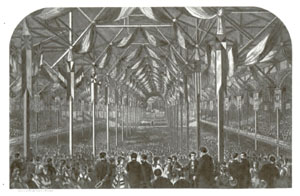
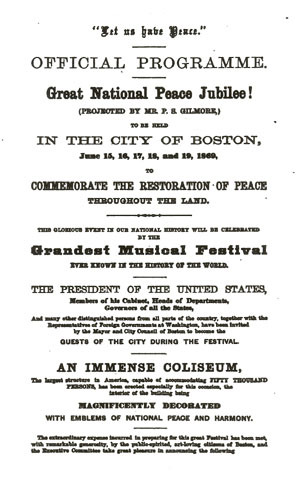
Illustrations show the announcement and
the interior of the huge Coliseum for the five day
National Peace Jubilee, held in Boston in June of 1869,
from Patrick S. Gilmore's History of the National Peace Jubilee
and Great Musical Festival (Boston, 1871).
This first Peace Jubilee was organized by band leader, Patrick Sarsfield Gilmore, to commemorate the end of the Civil War, and U.S. President Ulysses S. Grant attended the opening ceremonies. The Peace Jubilee featured a band and orchestra of about 1,000 musicians plus soloists and a chorus of 10,000.
It was one of the first "monster concerts." There was a second festival in 1872,
known as World's Peace Jubilee and International Music Festival
which was not well attended and lost money.

"Hymn of Peace" was written especially for the National Peace Jubilee and premiered during the First Day on June 15, 1869.

The words were written for the occasion by Oliver Wendell Holmes and set to "American Hymn" by Matthais Keller.
These are the words to the first verse of this hymn by Dr. Holmes:
Angel of peace, thou hast wandered too long;
Spread thy white wings to the sunshine of love!
Come while our voices are blended in song,
Fly to our ark like the storm-beaten dove—
Fly to our ark on the wings of the dove;
Speed o’er the far-sounding billows of song,
Crowned with the olive leaf garland of love;
Angel of peace, thou hast waited too long!
World's Peace Jubilee (1872)

This second music festival took place in Boston and was to celebrate the end of the Franco-Prussian War in Europe. It was once again organized by Patrick S. Gilmore and took place in June of 1872. Known as the World's Peace Jubilee and International Musical Festival, it featured about 2,000 musicians in the orchestra and 20,000 in the chorus. Among the special invited guests were two European composers, Johann Strauss II and Franz Abt. Though it was considered a failure because of poor attendance, this was probably the largest ensemble of musicians ever assembled in one location in the United States during the 19th century. The "Hymn of Peace" by Oliver Wendell Holmes was included in the music collection for the second Peace Jubilee in 1872. This hymn has been recorded for the first time.
See No. 32 under New England's Top 40 below.
Read about both the 1869 and 1872 Peace Festivals in
this American Heritage magazine article,
Big Boom in Boston
New England's "Top 40" From the Past
Compiled by Roger Hall
The survey covers only vocal selections which span roughly three centuries,
from 1620 to 1920.
The titles have been set up like a pop chart listing the Top 40. While there is no way to judge accurately the popularity of music from these years, these 40 selections are representative examples of the vast amount of vocal music performed, composed and published in New England during these centuries.
The music listed below includes psalms, ballads, hymns, anthems, music from cantatas and oratorios, folk spirituals, war and anti-war songs, sentimental songs, and patriotic songs.
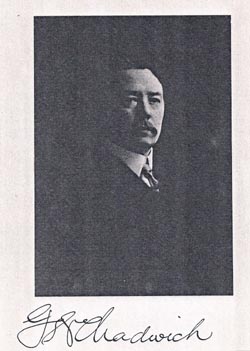
They include music from such New England composers as: William Billings, Dudley Buck, George W. Chadwick, Jacob French, Oliver Holden, Jeremiah Ingalls, Charles Ives, Edwin A. Jones, Lowell Mason, and Daniel Read.
Here are two sample audio files using Real Player:
What follows is a list of New England's vocal music from the past, containing both well known and unfamiliar pieces, mainly in live concert performances, and available on the two CDRs listed at the end of the list.
The selections are listed
in roughly chronological sequence:
I. Pilgrims
1. +Pilgrims: Psalm 8 - Ainsworth Psalter [CDR 1]
2. +Pilgrims: Psalm 100 - Ainsworth Psalter [CDR 1]
II. Purtians
3. +Puritans: Psalm 23 - Bay Psalm Book, 1698 [CDR 1]
4. +Reformer: Psalm 100 Tune New - Rev. John Tufts, 1720s [CDR 1]
III. Pirates and Native Americans
5. Pirate Ballad: Captain Kidd [CDR 1]
6. +Narragansett Indian Hymn: My Soul Doth Magnify the Lord [CDR 1]
IV. Birth of Liberty and The American Revolution
7. The Liberty Song - words: John Dickinson, 1768 [CDR 1]
8. Free America (tune: British Grenadiers) - words: Dr. Joseph Warren [CDR 1]
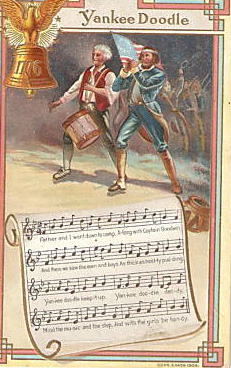
9. The Lexington March (tune: Yankee Doodle) [CDR 1]
10.
Father and I Went Down to Camp (tune: Yankee Doodle, ca. 1776)
[CDR 1]
11. +Chester - William Billings, 1778 & 1786 [CDR 1]
12. +Thanksgiving Hymn (tune: Kittery - William Billings,1778)(ed. by Roger Hall) [CDR 1]
V. New England Singing Masters
13.
+Majesty - William Billings, 1778 [CDR 2]
14. +The Bird - William Billings, 1790 [CDR 1]
15.
+Confidence - Oliver Holden, 1793 [CDR 2]
16.
Coronarion - Oliver Holden, 1793 [CDR 2]
17.
+Victory - Daniel Read, 1793 [CDR 1]
18.
Northfield - Jeremiah Ingalls [CDR 2]
19. New Jerusalem - Jeremiah Ingalls, 1796 [CDR
1]
20. +Dormant - Jacob French, 1802 [CDR 1]
VI. Federalism to Old Folks Concerts
21. +Adams and Liberty - words: Thomas R.T. Paine, 1798 [CDR 1]
22. + The Star Spangled Banner - words: Francis Scott Key, 1814 [CDR 2]
23. My Country 'Tis of Thee - words: Samuel F. Smith, 1831 [CDR 2]
24. +Jerusalem, My Glorious Home - Lowell Mason, 1840s [CDR 2]
25.
+Jehovah's Praise - Edward White, 1850s [CDR 2]
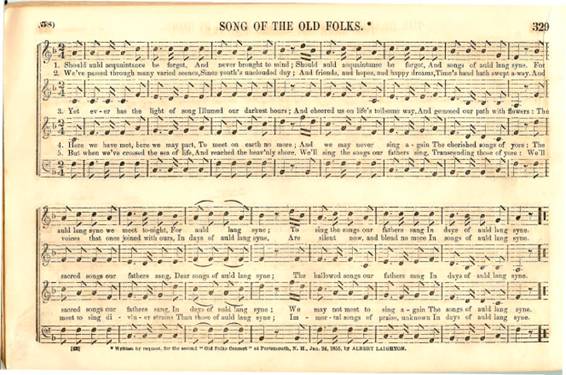
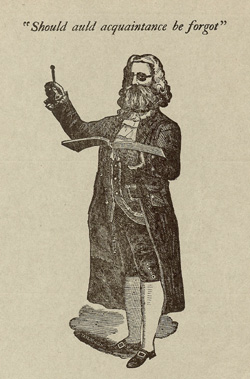
26. +Song of the Old Folks (tune: Auld Lang Syne) - words: Albert Laighton, 1855 [CDR 2
]
VII. The Civil War and Peace
27. +John Brown (tune: Glory, Hallelujah, 1861) [CDR 1]
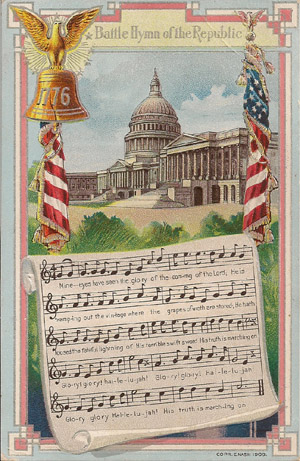
28. +Battle Hymn of the Republic (tune: Glory, Hallelujah) - words: Julia Ward Howe, 1862 [CDR 1]
29. +Shaker Pacifisit Hymn: A Prayer for the Captive, 1862 -
Cecilia DeVere , (1862)[CDR 1]
30.
Afro-American Spiritual: Go
Down, Moses [CDR 1]
31. +Give Us This Day - Stephen Foster, 1863 (ed. by Lorna Cooke de Varon) [CDR 1]
32. +Hymn of Peace - Oliver Wendell Holmes/
music: Keller's American Hymn [CDR 1] -- written for the National peace Jubilee in Boston in 1869, this song was reprinted in the 1872 World's Peace Jubilee collection.
VIII. The 1870s and 1880s
33. +Temperance Song: Sons and Daughters of the Pilgrims, 1870s [CDR 2]
34. +US Centennial Cantata: Centennial Meditation of Columbia - Dudley Buck, 1876 [CDR 2]
35. +Cantata Aria: How beautiful upon the mountains - Edwin A. Jones, from Song of Our Saviour,1881
(First Concert Performance, 1992) [CDR 1]
IX. 1890 - 1910
36. +Oratorio Chorus: The Lord is King - Edwin A. Jones, 1890 [CDR 2]
37. +Chorus: Easter Carol - Charles Ives, 1892 [CDR 2]
38. +Cantata Chorale: How Lovely Shines the Morning Star - George W. Chadwick,1909 [CDR 2]
X. World War I
39 +Patriotic Chorus: Song of the Marching Men - Henry Hadley, 1919 [CDR 1]
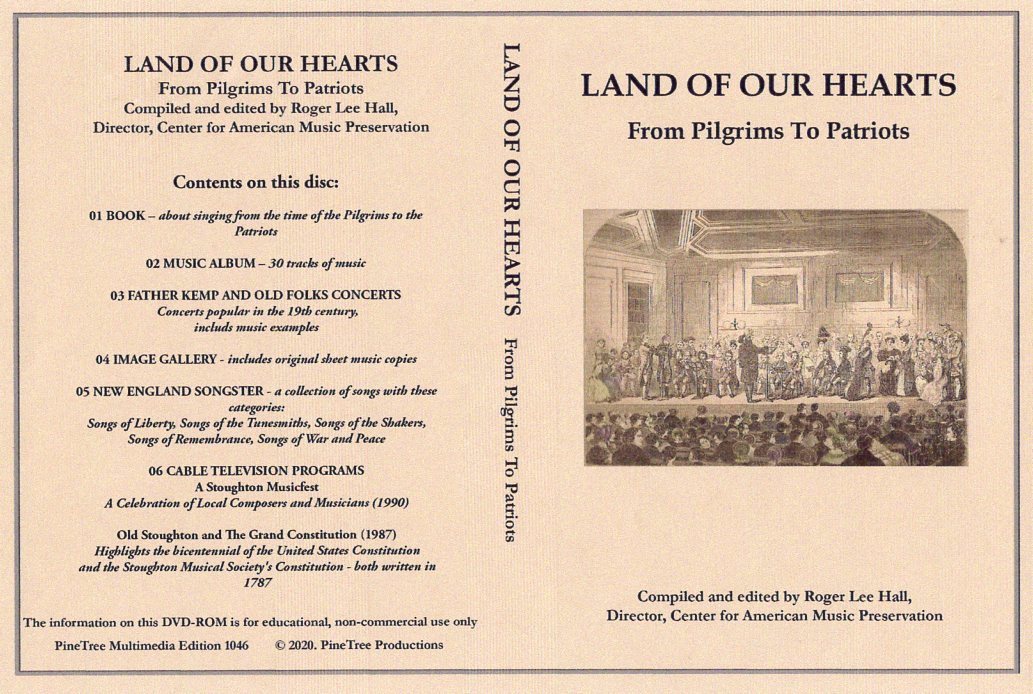
40.+Patriotic Chorus: Land of Our Hearts - George W. Chadwick, 1918 [CDR 1]
+ = First modern day recording = 30 out of 40
CDRs for the 40 selections listed above:
CDR 1: New England Song Treasury (70:32)
CDR 2: American Choral Sampler (66:29)
Early New England Music Recordings