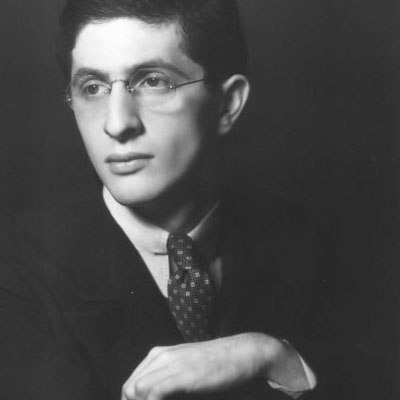
Note: This page about Bernard Herrmann scores
is copyright by
PineTree Productions
and not to be reprinted
without prior permission.
All Rights Reserved for original written material on this webpage.
© 2011
Bernard Herrmann:
A Centennial Tribute
(1911 - 2011)
This page is offered in tribute to the man who many believe was the most
innovative film composer from the past...
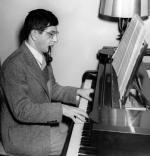
Bernard Herrmann
Born: New York City, 29 June 1911
Died: North Hollywood, California, 24 December 1975
He is one of the featured composers
in this new fully illustrated PDF book
"I feel that music on the screen can seek out and intensify
the inner thoughts of the
characters,
It can invest a scene with terror, grandeur, gaiety, or misery.
It can propel
narrative swiftly forward or slow it down.
It often lifts mere dialogue into the realm of
poetry.
Finally, it is the communicating link
between the screen and the audience,
reaching out and enveloping all into one single experience."
--Bernard Herrtmann,
MUSIC FOR GREAT FILM CLASSICS, Decca Records, 1971.
For the Bernard Herrmann Centennial in 2011,
our FMR critics selected
10 of their favorite Herrmann film scores
Click each link name to read their favorites
Roger L. Hall
Steven A. Kennedy
Steve Vertlieb
These Herrmann film scores were selected by all three FMR critics:
FAHRENHEIT 451 (1966)
NORTH BY NORTHWEST (1959)
PSYCHO (1960)
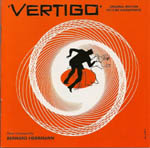
VERTIGO (1958)
inetreepro@aol.com.
Roger Hall's Bernard Herrmann Favorites
Ever since I was mesmerized watching CITIZEN KANEin the 1950s on
television, I have been a fan of Herrmann's film music. Over these many
decades I have listened to just about every film score he composed
and have enjoyed most of them.
How do you pick ten film score favorites from a composer who is generally
considered the best of his era?
It has to be purely personal choices based on which ones you like the most
and have stayed with you the longest.
Rather than discuss each of my favorites, I'll make some general comments
about a few favorite film scores. What attracts me especially to Herrmann's
film music is his uncanny ability to find the right orchestral combinations
to fit the film.
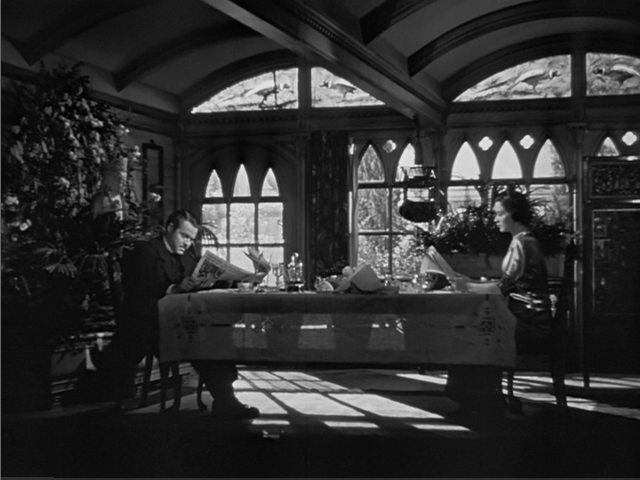
One example is from his first film score, and to my mind his best,
CITIZEN KANE. In the key scene known as "breakfast montage,"
Charles Foster Kane (Orson Welles) and his first wife,
Emily Monroe Norton
Kane (Ruth Warrick) progress through the years of their
marriage in a matter of minutes of film time. For that sequence, Herrmann
wrote a theme with variations which grows darker with each variation to
illustrate Charles Foster Kane growing harsher and more arrogant as he gets
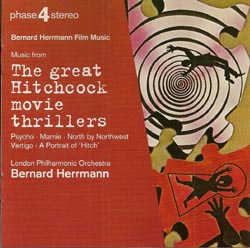
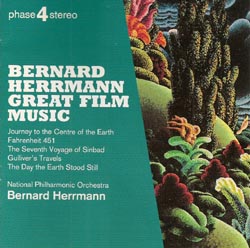
older. These variations can be heard on the Phase 4 CD,
Music From Great Film
Classics, conducted by Bernard Herrmann.
Another example is from Herrmann's only Oscar-winning score,
THE DEVIL AND DANIEL WEBSTER (original title: ALL THAT MONEY CAN BUY).
There is a dance known as "The Miser's Waltz" where
Miser Stevens (John Qualen) dances with the seductive Belle (Simone Simon)
in the forbidding mansion of Jabez Stone (James Craig),
who has received all his wealth thanks to his unwise deal with the Devil,
known in this film as Mr. Scratch (brilliantly played by Walter Huston).
Here again Herrmann uses a motif that starts softly with a graceful waltz and
gradually grows louder and more threatening as Miser Stevens dances to his
death. This is another superb example of Herrmann's gift of finding just the
right musical accompaniment for such a dramatic scene.
Then there is the one that Bernard Herrmann reportedly
liked the best of all his
film scores,
THE GHOST AND MRS. MUIR.
I once taught a college course
in film music history and chose this beautiful romantic score
as an example of the quality work accomplished by Herrmann
during the 1940s, long before his better known scores
of the 1950s and 1960s,
especially for the Alfred Hitchcock films.
One student was so excited she said
"this is a great movie and a great score"
and it had more emotional impact than any score
she had heard in recent years.
Many years ago, I spent a summer vacation week in Washington, D.C. with my mother and she took me to see
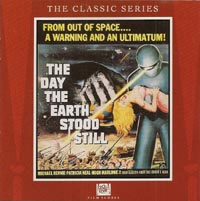
THE DAY THE EARTH STOOD STILL. Since there was a young boy (Billy Gray) in the film, I was immediately intrigued by his portrayal. The story also took place in Washington so that also made me fascinated with this story. Of course there was also the visitor from outer space who spoke with such a beautiful British accent named Klaatu (Michael Rennie) and his protective robot, Gort (Lock Martin). Herrmann wrote a terrific motif for this robot, heavy and forceful in its orchestration to symbolize the robot's massive size and incredible destructive powers. This score is also the first prominent one to feature electronic instruments, including two theremins, electronic violin, electronic bass and guitar. As Herrmann wrote for the Phase 4 LP release about his score: "The result seems to have been successful and most certainly predicted the shape of things to come for electronic scoring." Again, Herrmann was an innovator. His music impressed a young boy in the audience watching that film in Washington, D.C. back in the 1950s. It was the first film where I paid attention to the film score. Now sixty years later, I believe it is still the best film score composed for a science-fiction film.
My article, "From Hitchcok to Harryhausen: Ten Essential Herrmann Scores"
appeared
in this special Bernard Herrmann issue of
FILM SCORE MONTHLY
(April-May 2000)
.jpg)

This Blu-ray release is highly ecommended for Herrmann's brilliant film music
(isolated score track) and also the commentary by these film music people:
John Morgan, Nick Redman,
Steven C. Smith, and William Stromberg
Here are my 10 favorite Herrmann film scores in chronoligcal order:
- CITIZEN KANE (1941)
- THE DEVIL AND DANIEL WEBSTER (1941)
(aka: ALL THAT MONEY CAN BUY/ DANIEL AND THE DEVIL)
- THE GHOST AND MRS. MUIR (1947)
- THE DAY THE EARTH STOOD STILL (1951)
- VERTIGO (1958)
- JOURNEY TO THE CENTER OF THE EARTH (1959)
- NORTH BY NORTHWEST (1959)
- PSYCHO (1960)
- FAHRENHEIT 451 (1966)
- OBSESSION (1976)
-- Roger L. Hall, Editor, Film Music Review
Steven A. Kennedy's Bernard Herrmann Favorites
2011 is the 100th anniversary of Bernard Herrmann’s birth.
Herrmann’s music
has not quite received the big comeback
of Korngold but his music is still
appearing in concert
and even Wuthering Heights is managing to be staged
by
opera companies.
My entry into Herrmann’s music came from Saturday matinee showings of
Sinbad movies and my later interest in Hitchcock films. But his style had an
aural impact that still rears itself in some of my own concert music. In the
1990s we were unbelievably fortunate to see almost all of Herrmann’s music
find its way to CD. Here are my 10 favorite scores by this master film
composer in chronological order.
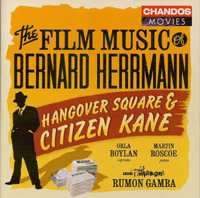
CITIZEN KANE (1941) is easily one of my favorite movies and Herrmann’s score is simply masterful as it moves through the intensity of Kane’s rise and fall. From its opening music through the overwrought “Salammbo’s Aria” you will not find a more engaging score that works well on its own but masterfully becomes a part of the fabric of the film.
For me there was no cooler sound than that opening music
from 1951’s THE DAY THE EARTH STOOD STILL. The cascading arpeggios,
the theremin, and all those odd orchestral sounds make this another
personal favorite that I return to listen to time and again.
I do not recall if I ever saw BENEATH THE 12-MILE REEF (1953), but
familiarizing myself with this score through its CD release
made it easily one of
my most recommended Herrmann scores
for friends. All those harps and that
undersea musical depiction
is simply fascinating to listen to as one marvels at
Herrmann’s ability to create such intriguing sounds in his orchestration.
Though THE TROUBLE WITH HARRY (1955) is probably one of Hitchcock’s
oddest films, Herrmann’s fun little innocent score is a simple delight and
features one his most memorable little themes. It’s the score here that
constantly winks at the viewer that this story is so weirdly absurd and yet
manages to menace us with a little creepiness all the same. Too bad the film
moves at an often slow pace.
Growing up in the 1960s and 1970s meant that you sat through lots of bad B-
pictures from a decade or so ago. There were not a lot of kid-friendly films
being made but at least it gave some of us a chance to hear interesting music
and no more so than in Ray Harryhausen effect films like THE 7TH VOYAGE OF
SINBAD(1958) where skeletons came alive in Herrmann’s creepy music.
This is
always the Sinbad movie that I cannot but help judge
all other movies with
this character
and again its Herrmann’s odd orchestrations that make it a
score I return to hear often.
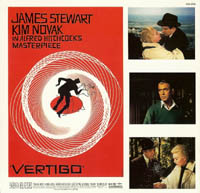
From the same year, VERTIGO(1958) remains
one of my favorite film scores and films. When
Varese Sarabande released its re-recording of
this score I must have played it continuously
for
weeks.
Simply one of the most gorgeous love
themes Herrmann ever wrote appears here and
the tension he creates with rich harmony is
unmatched. The opening titles alone make this an easy highlight.
The two following years continued the Herrmann-Hitchcock partnership with
some of his best work. NORTH BY NORTHWEST (1959) again has those great
titles but the musical build up that culminates on the face of Mt. Rushmore is
superb. Of greater comment in this film is where Herrmann chose not to put
music and this is a great teaching score to test students used to wall-to-wall
music about the ways composers can create tension
by waiting to insert music.
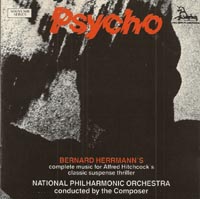
Then there is PSYCHO (1960) whose creepiness can only be truly felt apart from commercial interruptions (the way I had first seen the film on TV). This musical study in close intervals and musical terror is also coupled with that same mastery of when not to use music and when to bring it into the narrative. The music that follows the mad drive in the rain is often overlooked in this score but it is one of several water-influenced cues that Herrmann uses to accompany the story here. Nature even seems to be murderous whether it is rain, stuffed animals, or a shower.
The arpeggiated sounds that were a part of
THE DAY THE EARTH STOOD STILL
returned in Herrmann’s
impressionistic and compelling music
for FAHRENHEIT
451 (1967). Again it is always his instrumental choices,
coupled with intriguing harmonic shifts, that make his music so compelling
and never more so than here.
For me what is fascinating about Herrmann’s last film score,
TAXI DRIVER (1975), is how it pulls in jazz elements into his sound world.
His score perfectly captures the darkness of its characters with what at times
seems a very simple melodic idea. In some ways it is a bit of a casting back to
film noir days and some of Herrmann’s lesser known but no less interesting
work in the 1940s.
Most of Herrmann’s music would be composed by the time I was born and the
films his music supported would only begin to enter my film going awareness
in the early 1970s and later after his death. It was through Hitchcock films
that
his music would get noticed internally
by my musical style but not until the
latter part of the 1990s
did my own exploration of his scores begin to grow
my
appreciation for this master film composer.
Fortunately this coincided with the
release of so many of his scores that I could feed my personal musical interest
in one of the 20th century’s finest film composers.
-- Steven A. Kennedy
Steve's 10 favoites Herrmann scores in chronological order:
- CITIZEN KANE
- THE DAY THE EARTH STOOD STILL
- BENEATH THE 12-MILE REEF
- THE TROUBLE WITH HARRY
- THE 7TH VOYAGE OF SINBAD
- VERTIGO
- NORTH BY NORTHWEST
- PSYCHO
- FAHRENHEIT 451
- TAXI DRIVER
Note:
This article with pictures has been reprinted on the
File 770
fan site
without
permission to reprint it.
Elmer Bernstein once commented that, in his considered opinion,
Bernard Herrmann and Miklos Rozsa were the two greatest practitioners of
symphonic motion picture composition in the long history of the genre.
The centennial of Herrmann’s birth will be celebrated this year, and so we
thought it appropriate, then, to commemorate his enormous contribution to
the art of cinema by applauding some of his more outstanding works. While
choosing merely ten scores by the composer to discuss is a daunting task,
it is
nevertheless the assignment for which we were chosen.
For my own singular
collection of titles,
I have decided to include those Herrmann scores which
have had the most profound emotional influence, and impact upon me. My
reasons, as you will read, are purely personal, reflecting an unabashed
affection for both the composer and his incomparable artistic legacy.
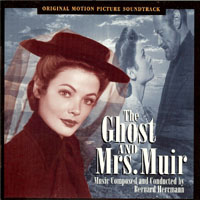 THE GHOST AND MRS. MUIR (20th Century Fox, 1947) – Among the most searingly romantic, and deeply sensitive scores ever composed for a motion picture, Herrmann’s outward bravado, as Elmer Bernstein tellingly observed in the documentary, Bernard Herrmann: Music For The Movies, was belied by the musical expression of his secret soul. For the timeless story of star crossed lovers, whose depth of passion for one another transcended mortal barriers, finding resolution at last, beyond the ethereal veil of eternal sleep, Bernard Herrmann composed, perhaps, his most profoundly beautiful score…a haunting, emotional masterpiece on wings of lyrical romanticism. The score, like the film that sired it, remains a gloriously tender rhapsody of idealized love and eternal devotion. THE GHOST AND MRS. MUIR (20th Century Fox, 1947) – Among the most searingly romantic, and deeply sensitive scores ever composed for a motion picture, Herrmann’s outward bravado, as Elmer Bernstein tellingly observed in the documentary, Bernard Herrmann: Music For The Movies, was belied by the musical expression of his secret soul. For the timeless story of star crossed lovers, whose depth of passion for one another transcended mortal barriers, finding resolution at last, beyond the ethereal veil of eternal sleep, Bernard Herrmann composed, perhaps, his most profoundly beautiful score…a haunting, emotional masterpiece on wings of lyrical romanticism. The score, like the film that sired it, remains a gloriously tender rhapsody of idealized love and eternal devotion.
- VERTIGO (Paramount, 1958) – Perhaps Herrmann’s masterpiece, as well as Hitchcock’s, this unforgettable film and score remain as arresting and fresh as when first released. Herrmann reached the zenith of his artistry with this heart breaking, Wagnerian score, filled with near operatic aspirations and tonality. Once again, idealized love is frustrated to the point of madness as the woman of James Stewart’s dreams is lost to him, an apparent victim of suicide. Obsession drives him literally to the brink and back again, realizing the living spectre of his dead love embodied in another woman. Herrmann’s music rises achingly to levels of exquisite torment as Stewart fights to recover both the woman he lost, and his own sanity.
- FAHRENHEIT 451 (Paramount, 1966) – Ray Bradbury, an American
.jpg) treasure, lent his genius to the motion picture screen when Francois Truffaut filmed the visionary science fiction classic. A tale of intellectual and emotional repression, Bernard Herrmann masterfully captured and conveyed the longing of souls yearning for freedom with his beautiful score, particularly expressed in the hauntingly eloquent final track, “The Road,” in which the chords of melancholy transition, from ashes to rebirth rise, as a phoenix of hope, in the rustling winds. treasure, lent his genius to the motion picture screen when Francois Truffaut filmed the visionary science fiction classic. A tale of intellectual and emotional repression, Bernard Herrmann masterfully captured and conveyed the longing of souls yearning for freedom with his beautiful score, particularly expressed in the hauntingly eloquent final track, “The Road,” in which the chords of melancholy transition, from ashes to rebirth rise, as a phoenix of hope, in the rustling winds.
- OBSESSION (Columbia, 1976) – Brian DePalma, who unashamedly found his own cinematic voice while emulating Alfred Hitchcock, filmed his own singular masterpiece in tribute to the Master’s VERTIGO. A ghostly apparition of the earlier film, OBSESSION is, nonetheless, a stunningly erotic tale of romantic love lost, as Cliff Robertson (channeling James Stewart) finds his dead wife once more, seemingly reincarnated as a young Italian girl he meets at an art gallery. Consumed with her uncanny likeness to his deceased bride, he blindly and selfishly works to recreate the past and restore her to his personal happiness. Herrmann, having lost none of his sentimental heart, fills the soundtrack with one of his most deeply felt and passionate scores for this hauntingly psychotic story of love and betrayal. Reportedly, Herrmann wept openly when viewing the finished picture. It would be, sadly, his next to last work for the screen.
- NORTH BY NORTHWEST (MGM, 1959) – Bernard Herrmann was one of a gifted hand full of screen composers equipped to write a truly exciting main title sequence. The overture for this Hitchcock classic is as remarkable an achievement musically, as was Hitchcock’s stunning, accompanying visual text. David Raksin remarked that only “Benny” Herrmann could get away with using a Fandango for a theme. However one describes it, Herrmann’s opening title music for NORTH BY NORTHWEST is an exhilarating roller coaster ride through a cinematic amusement park that sparks the flame for one of the most entertaining thrillers ever conceived, either by director or composer. The main titles set the uncertain stage and, like the fragile instability of exposure to an earth quake, we remain off center and on tilt for the remainder of the film. The exuberance and sheer vitality of the score weave a dizzying maze from which neither Cary Grant nor the audience will soon recover.
- GARDEN OF EVIL (20th Century Fox, 1954) – Herrmann proved
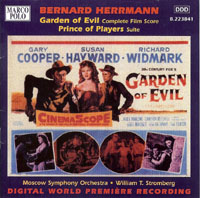 himself as adept at writing period scores as he was at home with contemporary music. This Gary Cooper vehicle, despite its western setting, contained all of the elements of great drama…survival, greed, heroism, and lust. Bernard Herrmann obliged the studio by writing richly expressive, full bodied and expansive themes, filling his musical landscape with one of his most colorful scores. So visual was his thematic material that 20th Century Fox chose to use elements of this score, along with his comparable music for FIVE FINGERS, as the basis for its stock music library, in trailers advertising the studio’s products for years to come. himself as adept at writing period scores as he was at home with contemporary music. This Gary Cooper vehicle, despite its western setting, contained all of the elements of great drama…survival, greed, heroism, and lust. Bernard Herrmann obliged the studio by writing richly expressive, full bodied and expansive themes, filling his musical landscape with one of his most colorful scores. So visual was his thematic material that 20th Century Fox chose to use elements of this score, along with his comparable music for FIVE FINGERS, as the basis for its stock music library, in trailers advertising the studio’s products for years to come.
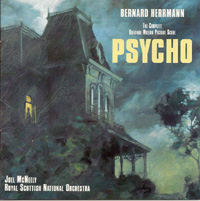
- PSYCHO (Paramount, 1960) – This is, unquestionably, among the most influential motion pictures scores since sound transformed the movies. Herrmann’s music for Hitchcock’s most grizzly, and infamous production, haunted both showers and bathroom tile for decades, foreshadowing countless succeeding scores, and contemporary composer’s inspiration. In the absence of Herrmann’s unforgettable presence, PSYCHO remains an excellent film. With the addition of his haunting main title music, and searingly abrasive accompaniment to murderous thrusts of a blade most “foul,” the picture becomes at once a masterwork of terror and, ultimately, poignant depravity. It is a testament to Herrmann’s power and inspiration that the score for Alfred Hitchcock’s most notorious motion picture is continually performed today by orchestras around the world.
- FIVE FINGERS (20th Century Fox, 1952) – Written and Directed by Joseph L. Mankiewicz, and based upon the book Operation Cicero, this war time thriller focused on the exploits of a renowned British spy. James Mason tendered his usual finely tuned, cultured, and dapper performance as the spy in the employ of the British Consulate, while Bernard Herrmann contributed the superb and thrilling themes that would add immeasurably to the suspense, and eventual undoing of the greedy, albeit brilliant, valet. As noted earlier, the generous thematic musical materials were used often in subsequent trailers, and television series produced by Twentieth Century Fox.
- THE SNOWS OF KILIMANJARO (20th Century Fox, 1952) – Based quite loosely upon the story by Ernest Hemingway, this stirring production directed by Henry King became a thoughtful, poetic, heart breaking romantic melodrama centered upon the tragic consequences of indulgence, war and remembrance. For the main titles Herrmann composed one of the most thrilling preludes, perhaps, in the history of cinema. His opening theme is a startling revelation, pulsing with dramatic urgency, compelling the listener to follow in rapt, spellbinding attention. Herrmann’s raging overture is among the most exciting pieces of music in his career, or any other. Rarely has the screen produced so ravenous and intense a musical salutation.
- JANE EYRE (20th Century Fox, 1944) - Charlotte Bronte’s sweeping novel offered the composer the groundwork for one of his most profoundly passionate and romantic scores. Alternately somber and rhapsodic, the tragic tale of a lonely heroine accepting a position as a governess at a Victorian mansion, lorded over by a dark, brooding widower, was the stuff of classic love, and legendary devotion. Beautifully directed by Robert Stevenson, and performed by Orson Welles and Joan Fontaine, the heroic grandeur of Bronte’s haunting adventure gave Bernard Herrmann wondrous license to explore the full breadth, and limitless horizons of his fierce, artistic palette. Herrmann’s lush, deeply sensitive translation of Bronte’s stormy romantic fantasy, awakened memories of love’s awesome power and beauty, expressed so eloquently by his tortured, yet exquisite musical tapestry.
Bernard Herrmann was a legendary force in Hollywood, contributing some of
the most singularly remarkable music in motion picture history. Over a period
of thirty five years, he composed the symphonic accompaniment and
inspiration for our most treasured dreams and aspirations.
If music is the light
by which cinematic imagery is emotionally defined
and illuminated, then
Bernard Herrmann was the flame
that danced atop the candle. Dominating the
expressive, new art form, Herrmann’s massive contributions forever changed
the way we listen to movies, turning a largely polite, arid background into a
psychologically complex, meaningful exploration of character and definition.
Herrmann was prolific in the concert hall, as well as related media. For
television, he wrote the ethereal background music for Rod Serling’s
bittersweet tale of childhood’s wonder lost in “Walking Distance”
for THE
TWILIGHT ZONE. It was a memorable achievement in a rich lifetime
of memorable achievements.
On this, the one hundredth anniversary of his birth…we celebrate his life.
--Steve Vertlieb
Steve's 10 Favorites in chronological order:
- JANE EYRE
- THE GHOST AND MRS. MUIR
- FIVE FINGERS
- THE SNOWS OF KILIMANJARO
- GARDEN OF EVIL
- VERTIGO
- NORTH BY NORTHWEST
- PSYCHO
- FAHRENHEIT 451
- OBSESSION
.jpg)
A Guide to Film Music (9th edition, PineTree Press)
includes information on Herrmann's film music
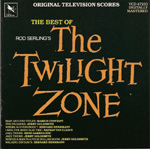
One of Herrmann's best scores for television
was for
a popular episode of THE TWILIGHT ZONE.
Read the article about "Walking Distance" in the book
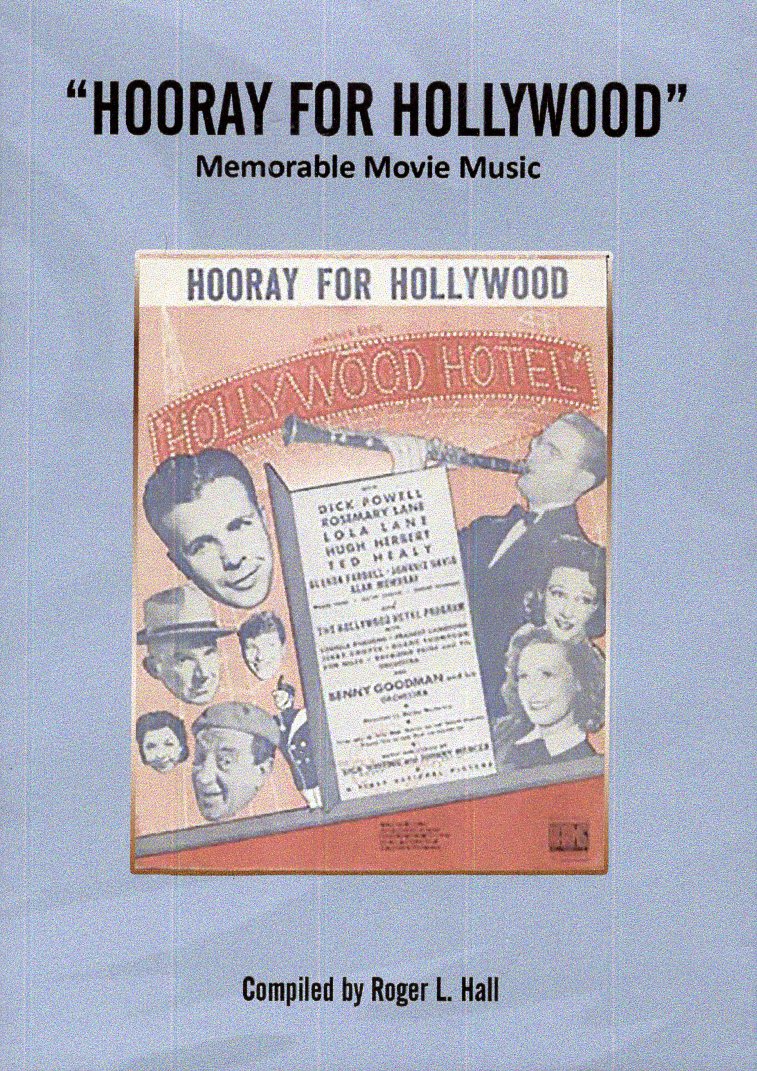
HOORAY FOR HOLLYWOOD - Memorable Movie Music
There are more Bernard Herrmann film scores than any other composer,
including the No. 1 choice.
To see the list, go to
100 Essential Film Scores of the 20th Century
Return to top of this page
|