
 |
 |
 |
 |
 |
 |


"Joy to the World"
The story of the earliest popular
American Christmas Carol
Joy to the world! the Lord is come.
Those opening words of the American Christmas carol first written in 1839
are significant because they were written by one of the best known
early American hymn-writers.
But he was not the first American to write Christmas music.
That was probably William Billings of Bostonwho wrote Christmas carols in the 1770s.
But "Joy to the world" by Lowell Mason has become one of the best known
of the many carols written in the United States of America.
It is also the earliest American carol still widely popular today.
Yet, some confusion still persists about its origin.
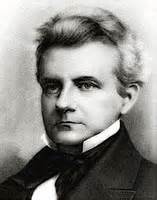
Lowell Mason at a young age
Many Christmas songbooks still credit the hymn to George Frideric Handel,
when it should be credited to
Lowell Mason, who was born in Medfield, Massachusetts in 1792
and he died in 1872 and is buried in Montclair, New Jersey.The confusion began mainly because Mason wrote "Arranged from Handel"
at the top of the music since he had selected two passages
from Handel's oratorio, MESSIAH.
In the hymnbook from 1867,
William Bradbury's "Fresh Laurels For The Sabbath School,
this Christmas carol is identified correctly as --"Arranged from HANDEL by Dr. L. Mason."
Both passages in "Joy to the world" are from First Part of Handel's MESSIAH.
The first passage is from the Chorus which sings:
Glory to God in the highest
This corresponds to the opening line of Mason's carol:
Joy to the world the Lord is come
The second passage is from the accompaniment
to the opening Tenor solo recitative on the words:Comfort ye my people
That accompaniment is similar to the second part Mason's carol on the words:
And heav'n and nature sing
Here are the complete four verses of ANTIOCH:
Joy to the world! the Lord is come;
Let earth receive her King;
Let ev'ry heart prepare him room,
And heav'n and nature sing, And heav'n and nature sing,
And heav'n, and heav"n and nature sing.Joy to the world! the Savior reigns;
Let men their songs employ;
While fields and floods, rocks, hills, and plains,
Repeat the sounding joy, repeat the sounding joy,
Repeat, repeat the sounding joy.No more let sin and sorrows grow,
Nor thorns infest the ground;
He comes to make his blessings flow
Far as the curse is found.He rules the world with truth and grace,
And makes the nations prove
The glories of his righteousness,
and wonders of his love.-- text by Isaac Watts, 1719
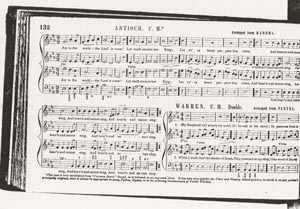
"Joy to the World" (tune name: ANTIOCH) by Lowell Mason was
first published in The Modern Psalmist in 1839.His hymn was later revised in a "improved" version for this tune-book:
The National Psalmist; A Collection of the Most Popular and Useful Psalm and Hymn Tunes; Together with a Great Variety of New Tunes, Anthems, Sentences, and Chants, by Lowell Mason and George James Webb
(Boston, 1848).It is this 1848 version [above picture] of the hymn
that has become the standard one heard today.
This Christmas carol was reprinted in later music collections
and became especially popular in the 20th century
first heard on radio sung by singers like
Bing Crosby, and later on the many recordingsby other popular singers.
One version from the 1950s sung by the gospel singer,
Mahalia Jackson, was
arranged and conducted by the world-famous film composerwho was then known as
Johnny Williams (now John Williams).
This title was one of the few American Christmas carols
included in the massive collection of music
contributed by 20,000 people in the USA titled,
Heart Songs: Melodies of days gone by (1909).In this collection "Joy To The World" is properly credited to
text by Isaac Watts and "Tune, Antioch, by L. Mason."It was reported in Wikipedia that "Joy to the World"
was "the most published American Christmas hymn
in North America" included in 1,387 hymnals.
It seems many folks still enjoy singing "Joy to the World" to --
Repeat the sounding joy!
--by Roger Hall, Director, Center for American Music Preservation
"Joy To The World" is one of the Christmas hymns included
on these two CDs:
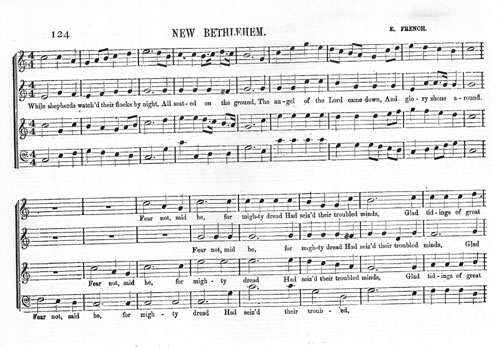
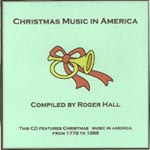
"NEW BETHLEHEM" - Christmas Music in New England
(AMRC CD 0010)
"Hail to the joyous day" -
Christmas Music in America
(AMRC CD 0034)
.
.
Help support the Center for American Music Preservation (CAMP)
and order this special multimedia collection --
. jpg.jpg)

Learn about this winter song...
One Horse Open Sleigh: The Story of "Jingle Bells"
.jpg)
More at the main page for the
Center for American Music Preservation
.
.
.

"New Bethlehem" -
Christmas Music in New England
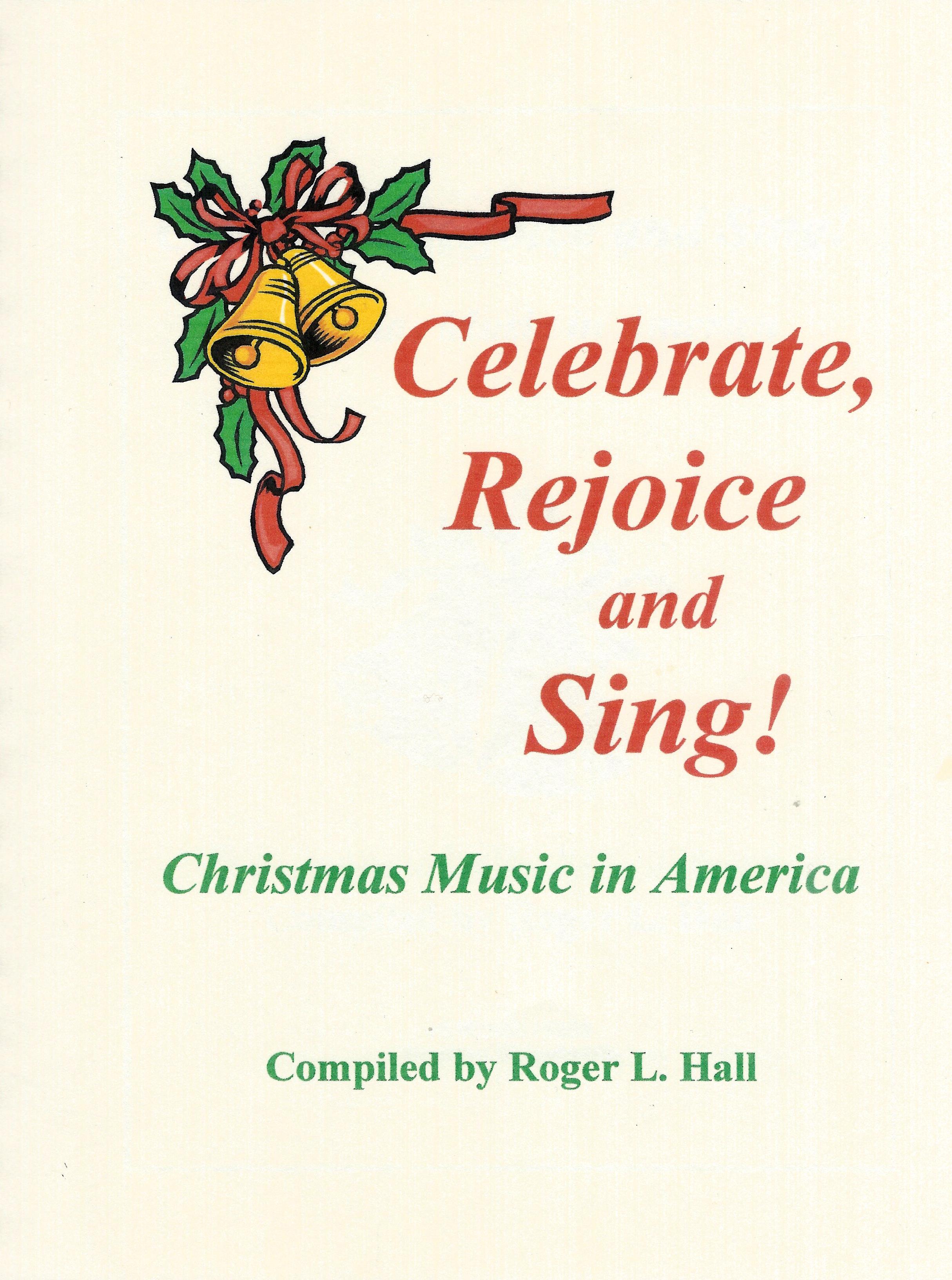
"Celebrate, Rejoice and Sing! - Christmas Music in America
"Hail to
the joyous day" -
Christmas Music in America
© 2024. PineTree Productions. All Rights Reserved. Contact: pinetreepro@aol.com.