
 |
 |
 |
 |
 |
 |
Memories of Oheka Castle
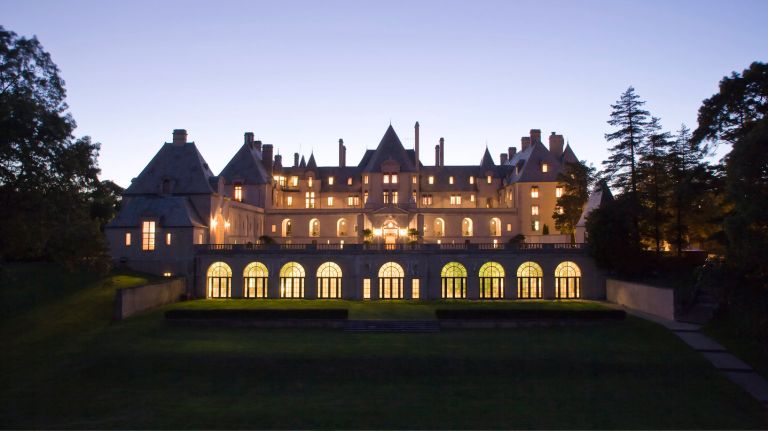
Nighttime at Oheka
(courtesy - Oheka Castle website)
This PDF book now On Sale for a limited time!
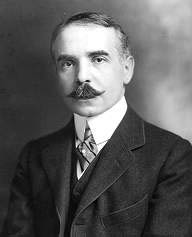
Otto Hermann Kahn
Born: Mannheim, Germany, February 21, 1867
Died: New York, New York, March 29, 1934
He named his dream castle: "OHEKA" after the initials of his full name
(O=Otto/ HE=Hermann/ KA=Kahn).He was a prominent investment banker for Kuhn, Loeb and Co. in New York.
He was known for his generous support of the Arts and Artistslike musician, George Gershwin, and poet, Hart Crane.
He also helped with the merging of railroads
and investments for Paramount Pictures in Hollywood.
He appeared briefly in a pre-Code motion picture musical-comedy,
"Glorifying the American Girl" (1929)
He also appeared on the cover of TIME Magazine in 1925.
Oheka Castle was completed in 1919. It originally had 127 rooms
and occupied 109,000 square feet of space, making it the second largest private residencesin the United States after the Biltmore Estate in Ashville, North Carolina.
The New York Times called OHEKA "the finest country home in America."
It was also the largest residence built in New York State andis now the largest restored home in the USA after being purchased in 1984
by property developer, Gary Melius
At that time it was a total ruin after vandals destroyed most of the castle.
But it survived because Otto Kahn had wisely had it constructed
using mainly steel. and concrete and very little wood.
This front entrance staircase at Oheka was modeled after the Château de Fontainebleau in France:
A few quick shots of Oheka Castle were shown in the opening newsreel
in the classic 1941 Hollywood film, CITIZEN KANE.Otto Kahn was a big supporter of George Gershwin's music.
He attended the historic First Performance of Gershwin's first concert work,
"Rhapsody in Blue," at Aeolian Hall in New York in 1924.
Kahn also helped finance some Broadway shows, including the first all Gershwin musical,
"Lady Be Good," which premiered on December 1, 1924 ands ran for 330 performances.
One of the hit songs from that musical was "Fascinating Rhythm"recorded by Fred and Adele Astaire with George Gershwin playing piano on the recording.
This endorsement to George Gershwin made by Otto Kahn in 1928:
...in his art, thoroughly and uncompromisingly American as it is,one of their foremost spokesman.
In the rhythm, the melody, the humor, grace, the rush and sweep
and dynamics of his compositions, he expresses the genius of young America.
That quote is included in this illustrated booklet published
in honor of the 100th birthday of Gershwin in 1998
Young band leader Roger Wolfe Kahn who formed his own orchestra in 1923
Otto Kahn's son, Roger Wolfe Kahn (1907-1962), was a talented musician
and reportedly could play 18 different instruments.
His favorites were piano and saxophone.
Among the famous later Big Band musicians who played in his band
were Tommy & Jimmy Dorsey, Artie Shaw, Jack Teagarden, and Joe Venuti.
Roger Wolfe Kahn co-wrote this song with Irving Caesar and Joseph Meyer -
a big hit in 1928 and has had over 150 cover records by many later pop singers
including Shirley Bassey, Doris Day, Bing Crosby, Frank Sinatra
and also jazz musicians like -- Bix Beiderbecke, Miles Davis, Stan Getz,
Les Paul, Django Reinhardt and others.
Illustrated Webinar:
"Otto Kahn: A Personal Connection with the Gilded Age Music Patron"
Otto Hermann Kahn (1867-1934) was one of America's wealthiest citizensin the early 20th century and his beautiful Oheka Castle
was the second largest private residence built in America and
is now the largest private residence which has been restored.
Otto Kahn spent considerable time and money in support of music and other arts.He was a major supporter of the Metropolitan Opera in New York in its early years
and brought major opera people from Europe, especially the famous Italian tenor, Enrico Caruso.
Kahn also helped support many musicians and actors on Broadway,
including composer, George Gershwin, and actor, Paul Robeson.
A webinar about Otto Kahn and The Gilded Age was produced six times (2020-2024)by the New York Adventure Club
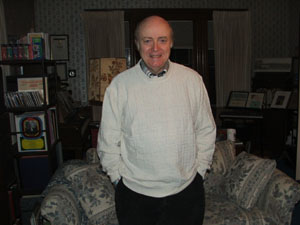
and presented by Roger Hall, a former Eastern Military Academy cadet
and now an ASCAP songwriter, music preservationist,
and Director of the Center for American Music Preservation (CAMP).
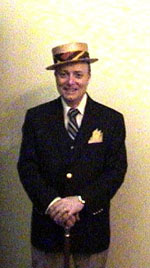
Friends of Oheka Garden Party in 2004
He was invited to a Roaring Twenties party
to sing a few Gershwin songs,
accompanied by 1920s recordings of
George Gershwin at the piano,at the Friends of Oheka Garden Party shown here


.jpg)




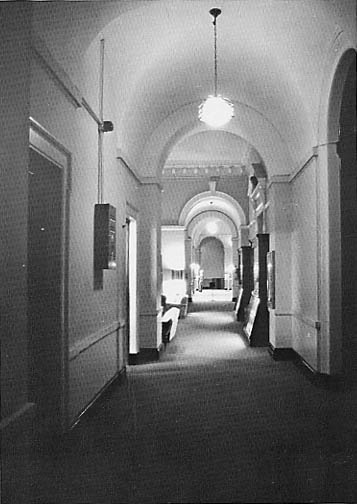
Picture of exterior of Oheka Castle and first floor hallway from EMA yearbook
in Crazy Rhythm: Memories of Eastern Military Academy and Oheka Castle
Order your copy of this PDF book
now available at Special Reduced Price!
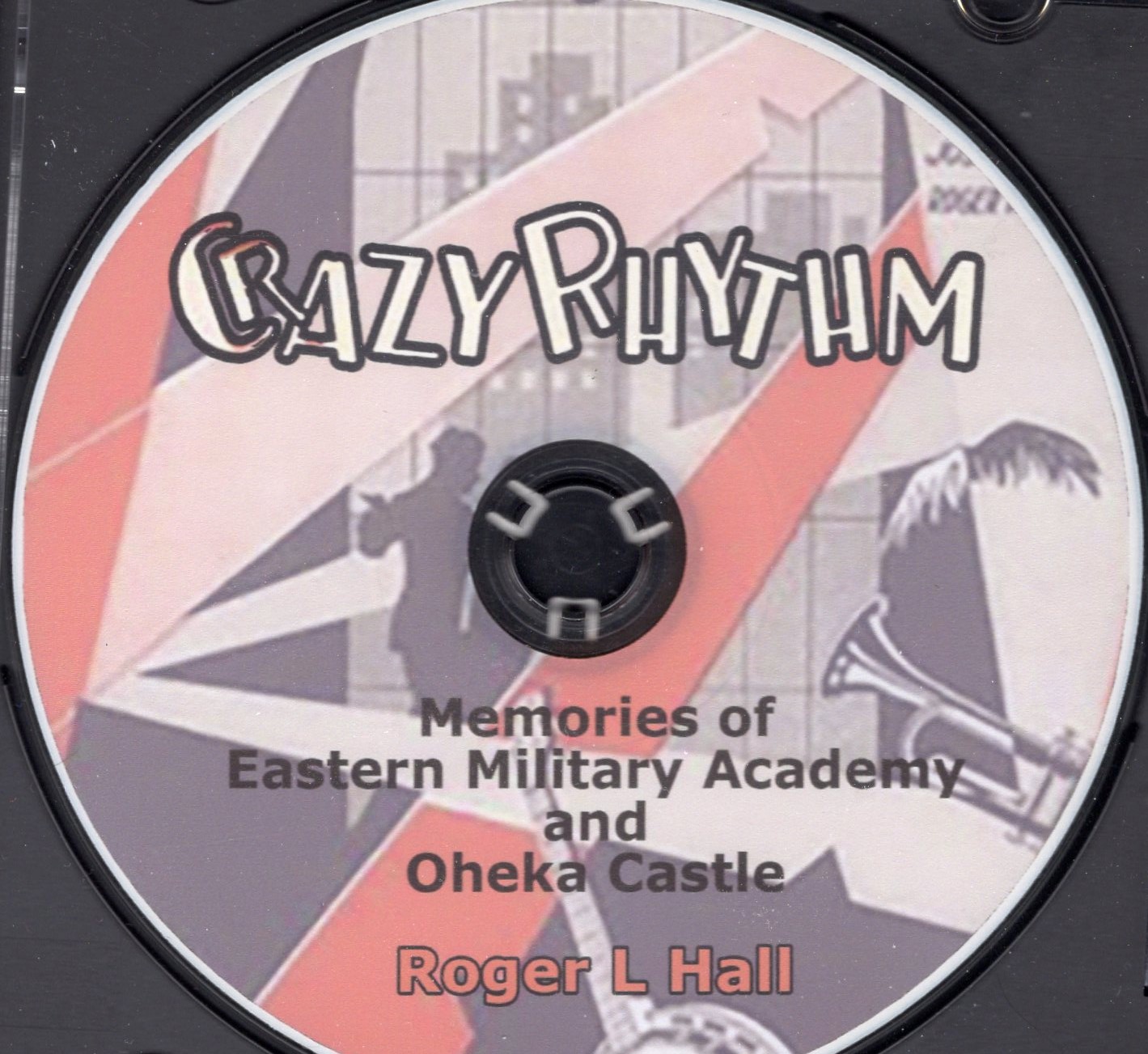
CRAZY RHYTHM:
Memories of Eastern Military Academy and Oheka Castle
(PineTree Press, new edition, 2025)Songwriter Roger Hall's personal memories
with a large picture gallery supplement
readable on any device for PDF books.
Special Sale Price!
For a limited time
The cost is only $9.95 for this PDF book
sent by email attachment anywhere in the world!To order click the "Add to Cart" below
After you have placed your order,
please be sure to send your email address
so you will receive the PDF book
directly by email attachment
To send your email address -- click here
For any questions -- click here
Also available separately is Roger Hall's
earlier stories
about his years there in the 1950s titled,
"E.M.A. at Oheka"
in this PDF book --


In addition to his book of memories, "Crazy Rhythm"
he has also written about his memories as a young cadet
singing in the glee club at
Eastern Military Academy in the 1950s in another PDF book,
"Free As The Breeze" -
A Songwriter's Joys and Sorrows
© 2019-2026, PineTree Productions. All Rights Reserved.
No pictures from this website to be reproduced without permission. Contact: pinetreepro@aol.com